

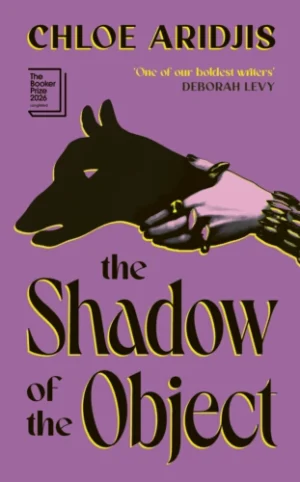
This year’s Booker Prize is shaping up to be one of the best contested in years and singing to us from the 2026 longlist is The Shadow of the Object by Chloe Aridjis. This atmospheric tale of perception and awakening is told by Flora, a Mexican woman with a rich interior life, leading a somewhat sedate life in London. Whilst visiting her mother in Mexico City, Flora is badly bitten by the family dog and hospitalised. Here she meets Wilhelmina, elderly toy collector and magic lantern performer. Their strange affinity will come to challenge Flora’s notions of life, longing and loss.
Flora has been ambivalent about herself for many of the forty-plus years of her life, describing herself as ‘phlegmatic, melancholic, yet prone to occasional acts of daring’. Reality has seldom lived up to the stories she constructs in her head, She’s had a few romantic attachments, taken a history degree when actually she yearned for a creative career, and has encountered several ‘dead ends’ in life before becoming a master polisher at a Soho jewellers, restoring lustre and beauty to silver. Flora tells us that she’s always believed that most things ‘had the potential of being enhanced, of being given a small lift out of their matte existence’.
And so, serendipitously, Wilhelmina makes her entrance. A small, German lady in a wheelchair, admitted to hospital with serious lung problems; over time the pair share curious observations and intimacies. Wilhelmina once owned one of the world’s greatest collections of optical toys, zoetropes, shadow puppets, magic mirrors and lanterns. She has a lantern with her and along with her life story, she shares some of its luminous images: a nun clutching a scarlet tipped dagger, a hare in Prussian blue with diaphanous ears,Venetian funeral gondolas.
Then, as with the sleight of an illusionist’s hand, everything changes. A plot curveball sees Flora returned to London and in possession of the magic lantern, her destiny to meet Wilhelmina’s son, Max, and transform both their lives through the ‘bygone power’ of this archaic instrument.
In a novel of wonderful ideas and passages of beautiful writing, Aridjis considers how we create meaning to our lives and maintain a connection to the fantastical. Instead of becoming bogged down by the prosaic and losing the ability to daydream, we must hold on to the light. This is embodied in Flora’s journey through the story.
‘As you grow older your fantasy life starts slipping away, early daydreams, romantic and professional, less and less likely to materialise. The options narrow, ships set sail one by one. I had seen many, many ships depart’.
Forewarned of Max’s life history and lethargic nature and grappling with subconscious images from her own past, Flora formulates a plan.
Rich with Wilhelmina’s storytelling and championing of ‘the persistence of vision’, The Shadow of the Object is a captivating and psychological tale, a thrilling inclusion on the Booker longlist.
The Shadow of the Object by Chloe Aridjis is published by Chatto & Windus, 192 pages.