

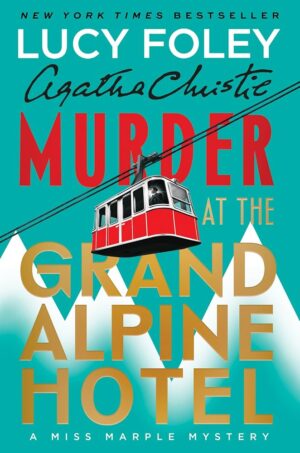
2026 marks fifty years since the death of Dame Agatha Christie and the posthumous publication of her last Miss Marple detective story. Since then the legendary Jane Marple has been portrayed countless times on screen and stage, knitting needles click-clacking as the imperturbable elderly sleuth solves yet another crime. Murder at the Grand Alpine Hotel by Lucy Foley is the first Marple continuation novel. On holiday in a luxury hotel in the Swiss alps, Marple steps in when a fellow guest is murdered. Written with wit and élan, abuzz with drama and red herrings, Foley’s first Marple outing is the perfect weekend sofa read.
It’s 1950 and the Grand Alpine Hotel is bustling with international guests. These immediate post-war years have been kinder to some, the Americans considerably more vigorous and affluent than their English counterparts; who are somewhat grey and dull from years of rationing. The English also appear permanently startled by all this continental flamboyance, flowing champagne and ice skating waiters.
Amongst them is Miss Marple, on holiday with her good friend, Mrs Bantry, and that lady’s paid companion, Diana Glass. Anticipating a sedate winter break spent admiring the mountains and bird-watching, the not-so-amateur detective is set to be disappointed. Not for the first time, a Marple holiday is interrupted by a shocking murder. One of the guests has been brutally dispatched. A snow blizzard whips up, the remaining guests are simultaneously outraged and terrified, and Miss Marple teams up with a French detective to solve the case.
This is such a fun read, delivered with great gusto by Foley, who is keen not to replicate Christie but has said in interviews that she wishes the novel to be ‘in conversation’ with both the Miss Marple canon and our own times. This she has achieved admirably, shining a 21st century light on the ageism and sexism of the mid-twentieth century,
At one point in the proceedings, Marple is casually dismissed as a ‘moth-eaten old dear’, and when the detective attempts to shield her from the sight of a dead body, she is most brusque, pointing out that her generation, who have lived through two wars, have witnessed far more horrors than the young.
The idea of becoming less valid or visible with age is expanded in Foley’s characterisation of other female guests (and suspects) : Sylvia Sinclair, a glamour puss actress whose star is on the wane now that she’s heading towards forty, and Diana Glass, who as a ‘companion’ in her thirties, knows that she is seen as an unproductive ‘left-behind’ woman.
Interestingly, Foley tells her story from the point of view of other characters. We only glean Miss Marple’s thoughts and intentions through their observations. What is clear is that each of them have to revise their original opinion of her as an ineffectual, slightly ‘dithery’ old lady.
As the action ramps up to a finale, it’s all going on. Infidelity, pistol shots, blackmail, late night knocks on bedroom doors. And as Miss Marple starts to feel the pressure, Mrs Bantry is on hand with a tin of Huntley and Palmer biscuits, because ‘in times of strain only English biscuits will do’.
A delight.