

In the mood for...

Review by

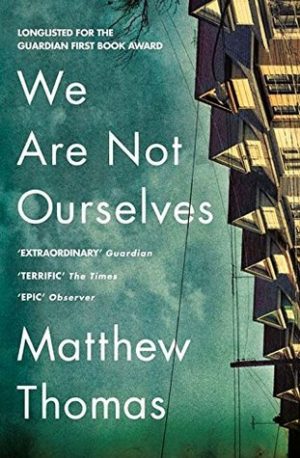
We Are Not Ourselves

A heart-wrenching novel about the devastation caused by early-onset Alzheimers

His debut novel took Matthew Thomas a decade to write. Was it worth the ten-year slog? In my opinion, yes. Thomas has simultaneously crafted an intimate story of an ordinary family and an epic of post-war America. Born in 1941, the product of a stormy Irish Catholic working-class upbringing in Queens, New York, Eileen Tumulty craves respectability. Coming of age in the early sixties, she meets and marries a young scientist named Edmund Leary. But while Eileen is deeply aspirational for her family, the quiet, unassuming Ed refuses to give up his teaching for a better-paid job. Eileen dreams of a different life: a better job, a bigger house, more respectability.

Read full Review

Review by

The Moon is Down

A fascinating piece of war time propaganda

The story behind The Moon is Down by John Steinbeck World War II novel is as fascinating as the book itself. Steinbeck, a world famous author by the start of the war, was deeply concerned about the rise of Fascism in Europe. He’d noticed the Fascists’ clever use of propaganda and urged the precursor to the CIA, for whom he worked, to create their own. In 1941, Steinbeck wrote The Moon is Down, which is largely based on conversations with people who’d fled their occupied countries. The book would become one of the most read underground novels of the war, with thousands of copies printed clandestinely in France, Denmark, Norway, Belgium and the Netherlands. Judging by its success, it must have played a role in mobilising resistance and keeping up morale.

Read full Review

Review by

Silence – In the Age of Noise

A peaceful little must-read

Do yourself a favour. Take a moment out from whatever you have to do (now is the perfect time, as we approach the Christmas rush at work, school and home) and read this little book. It’s written by Erling Kagge, a publisher, writer and the first person to reach the North Pole, South Pole and climb Mount Everest. Kagge knows a thing or two about silence, having spent 50 days alone on his trek to the South Pole.

Read full Review

Review by

The Life of a Song

Anecdotes about 50 of the world's best-loved songs

Did you know that Leonard Cohen’s song ‘Hallelujah’ took him two years, ‘ 50,000 cigarettes and several swimming pools of whiskey’ (to deepen his voice) to make? Or that ‘Amazing Grace’ was not actually written by a slave but  a repenting slave trader. Or that Ronald Reagan used Bruce Springsteen’s ‘Born in the USA’ on his campaign trail, promising that he, just like the song, would make the electorate’s dreams come true, without realising that the song was actually about a Vietnam veteran with post-traumatic stress disorder, unable to find work? Neither did I, until I stumbled upon Cheal and Dalley’s compelling little book The Life of a Song, a compilation of the stories of 50 well-known songs written by music critics. A perfect present to your music loving friend, or even yourself.

The Life of a Song is published by Financial Times and Brewer’s, 208 pages.

Review by

Lincoln in the Bardo – Man Booker Prize Winner 2017

Party down at the cemetery

Well, here’s something utterly different. A book with a cacophony of 166 different voices portraying the Bardo (a temporary state in between death and re-birth in the Buddhist faith) of President Abraham Lincoln’s 11-year-old son Willie. It’s an unusually structured and challenging book, and a moving portrayal of death and grief (and you’ll never walk through a cemetery at night in quite the same way).

Read full Review

4321 by Paul Auster

Review by

4321

The Great American Novel, but not as you know it

4321 by Paul Auster is a novel about Archie Ferguson, American grandson of a Jewish immigrant. Born in 1958 to hard-working parents, he grows up, negotiates adolescence, plays baseball, gets to know his extended family, lives through the major events of the 20th century. So far, so predictable. But because this is Auster, there is a twist: this is not one linear narrative; it is four stories, four lives in one. Same boy, four different childhoods, four different paths. Remarkably broad in scope yet fantastically rich and detailed, this is Paul Auster’s post-modern version of The Great American Novel.

Read full Review

Review by

Cannery Row

A little book to make you happy

I’ve just been through one of the longest good book ‘droughts’ in my reading career. In the end I decided to reach for a classic, sometimes the only way out, and grabbed hold of John Steinbeck’s Cannery Row. It’s a short book that is more like a portrait of a community than a linear narrative, but within it are sublime little stories, descriptions of people, places and atmosphere that only an old hand like Steinbeck can conjure up.

Read full Review

Review by

The Ministry of Utmost Happiness

Not a flawless comeback

Twenty years after winning the Booker Prize for her debut novel The God of Small Things, Arundhati Roy is back with a new novel. The Ministry of Utmost Happiness weaves together many stories, but at its core is the story of Tilo and her three suitors: Musa, Naga and Biplab and the violent history of Kashmir and India. My feelings about this book oscillated between wild enthusiasm, slight confusion and occasional boredom. Roy’s undisputable skills as a writer kept me going, but I’m not sure I’d call it a flawless comeback.

Read full Review

Review by

Eleanor Oliphant is Completely Fine

A completely fine beach read

Eleanor is a woman who has elevated living alone to an art form. Her days follow the same pattern week in week out – a dull office job, the Telegraph cryptic crossword, the Archers, a regular chat with ‘Mummy’, no friends…and two bottles of Tesco vodka to get through the weekend. She is clearly not fine at all, and the novel is an investigation into why she is not fine, and what happens when she deals with her terrible past and finally allows herself to thaw.

Read full Review

Review by

Darke

Tragedy as comedy

Meet English teacher James Darke, a 60-year old grumpy, selfish, snob, as cynical, judgemental and politically incorrect as they come. Darke has decided to close the world out – literally – starting by drawing the curtains in his house, filling in the mail slot in his door and cancelling his email account. There are no limits to what Darke will do in his quest to be left alone, and that includes pretending to be deaf so he won’t need to talk to people. There is, of course, a reason for Darke’s dark behaviour, which, as it’s slowly revealed, turns out to be far from funny. If you, like me, enjoy dark humour, the occasional unpleasant character and many-layered stories, this book is for you.

Read full Review