

... something challenging

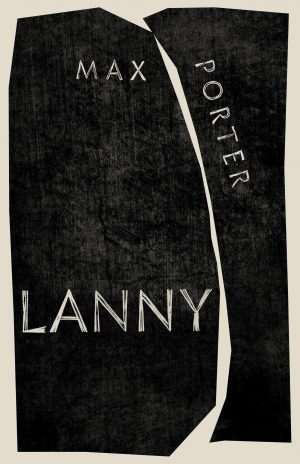
Lanny by Max Porter

Review by

Lanny

Another puzzle from Max Porter

Max Porter’s books are wonderfully strange things. They are novels, but occasionally seem to wander into the realm of poetry. The language is sparse, distilled down to the very essence of what he wants to communicate. The sentences twist and turn; literally, in this case. The first few pages of his new book were incomprehensible to me, but somehow Porter lures you in and doesn’t let you go. Lanny by Max Porter is set in a quintessential English village, where Lanny, an exceptionally creative, talented boy, his banker dad and author mum have just moved. But becoming part of this closed community is not a smooth ride. I’m not sure I liked Lanny as much as Porter’s first book, Grief is the Thing With Feathers, which I loved, but still think it’s a worthwhile read.
Read full Review

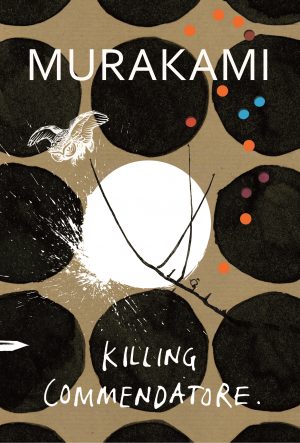
Killing Commendatore by Haruki Murakami

Review by

Killing Commendatore

An intense and magical novel about creativity and meaning

Disconcerting, mysterious and riveting, Killing Commendatore by Haruki Murakami is the story of a nine month period in the life of a portrait painter. Newly separated from his wife, he holes up in a mountaintop retreat where his discovery of a hidden painting sets in train a circular series of extraordinary events that reveal aspects of himself – and the world of instincts and ideas – that both change him forever and give him back his future.

Read full Review

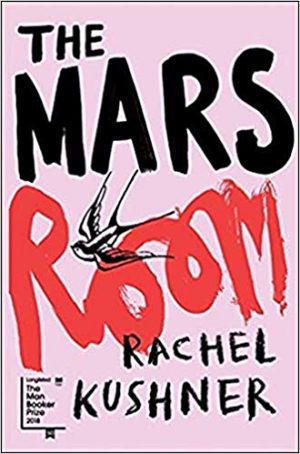
The Mars Room by Rachel Kushner

Review by

The Mars Room

Gritty prison drama

I started The Mars Room by Rachel Kushner knowing very little about American prison life. The little I did know, I’d learnt from watching the hit American TV series Orange Is The New Black. I finished Kushner’s novel knowing a great deal more about the American justice and penal systems and feeling deeply depressed by what I had learned. The Mars Room lays bare the grim reality of those women living their lives on the margins of modern-day America.

Read full Review

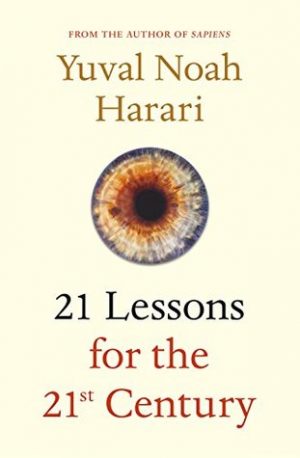
21 Lessons for the 21st Century by Yuval Harari

Review by

21 Lessons for the 21st Century

Not perfect but an accessible catalyst for thought

Fans of Homo Sapiens and Homo Deus will no doubt run to buy the latest instalment: 21 Lessons for the 21st Century by Yuval Harari. Whereas Homo Sapiens dealt with the past and Homo Deus with the future, his last book – you guessed it – is about now. Harari has an enviable ability to present complex ideas, however depressing, with clarity and humour. I don’t necessarily buy into all of his theories and sometimes I wish he’d gone into more depth. The book suffers from being a collection of essays written for various publications rather than a coherently planned book. (Do I smell a faint whiff of publishers’ opportunism?) But the fact that he engages millions of people around the world in thinking about ‘big issues’ is a redeeming factor for me. Read it as an accessible catalyst for your own thoughts.

Read full Review

History of Violence by Édouard Louis

Review by

History of Violence

Raw, honest and brave about rape

One of the extraordinary things about Édouard Louis’ debut novel, The End of Eddy, was the complete absence of judgment and bitterness on behalf of the protagonist. Louis’ second novel, History of Violence, shares this quality and, again, it’s a story from Louis’ own life. On the way home from Christmas dinner, Louis meets a stranger whom he invites home for a drink. They share their life stories and have passionate sex. But as the stranger prepares to leave the next morning, things turn ugly. Louis’ skill as a storyteller, intelligent observation of his own and other people’s reactions and ability to draw connections between the personal and the collective proves what an extraordinary talent he is.

Read full Review

Review by

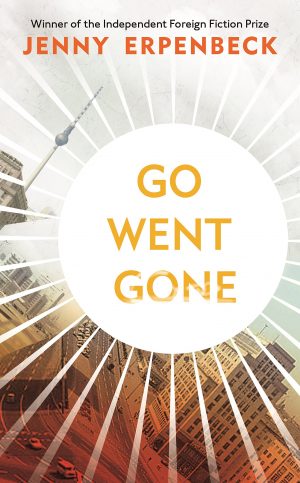
Go, Went, Gone

A hauntingly beautiful novel about one of the most important issues of our time

This is a book that offers an intelligent fictionalised response to the refugee crisis by distilling the unimaginable scale and horror of a worldwide problem to the personal stories of a few people, played out in today’s Berlin. Full of generosity and humanity, it manages to be wide‐ranging and universal and yet astonishingly simple.

Read full Review

Review by

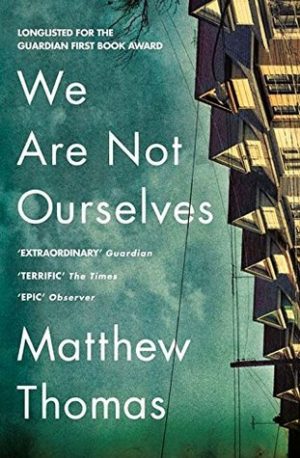
We Are Not Ourselves

A heart-wrenching novel about the devastation caused by early-onset Alzheimers

His debut novel took Matthew Thomas a decade to write. Was it worth the ten-year slog? In my opinion, yes. Thomas has simultaneously crafted an intimate story of an ordinary family and an epic of post-war America. Born in 1941, the product of a stormy Irish Catholic working-class upbringing in Queens, New York, Eileen Tumulty craves respectability. Coming of age in the early sixties, she meets and marries a young scientist named Edmund Leary. But while Eileen is deeply aspirational for her family, the quiet, unassuming Ed refuses to give up his teaching for a better-paid job. Eileen dreams of a different life: a better job, a bigger house, more respectability.

Read full Review

Review by

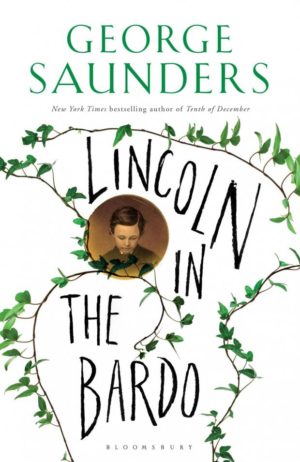
Lincoln in the Bardo – Man Booker Prize Winner 2017

Party down at the cemetery

Well, here’s something utterly different. A book with a cacophony of 166 different voices portraying the Bardo (a temporary state in between death and re-birth in the Buddhist faith) of President Abraham Lincoln’s 11-year-old son Willie. It’s an unusually structured and challenging book, and a moving portrayal of death and grief (and you’ll never walk through a cemetery at night in quite the same way).

Read full Review

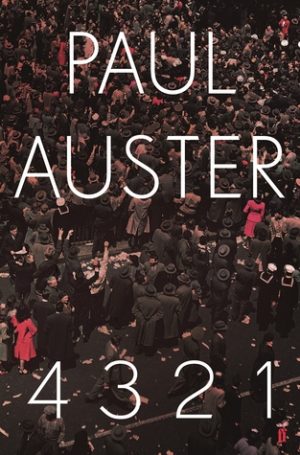
4321 by Paul Auster

Review by

4321

The Great American Novel, but not as you know it

4321 by Paul Auster is a novel about Archie Ferguson, American grandson of a Jewish immigrant. Born in 1958 to hard-working parents, he grows up, negotiates adolescence, plays baseball, gets to know his extended family, lives through the major events of the 20th century. So far, so predictable. But because this is Auster, there is a twist: this is not one linear narrative; it is four stories, four lives in one. Same boy, four different childhoods, four different paths. Remarkably broad in scope yet fantastically rich and detailed, this is Paul Auster’s post-modern version of The Great American Novel.

Read full Review

Review by

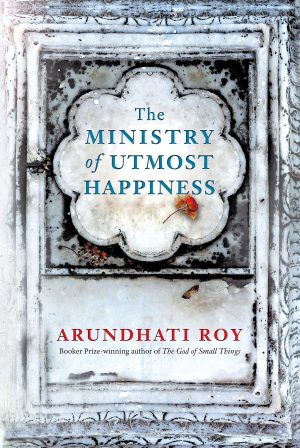
The Ministry of Utmost Happiness

Not a flawless comeback

Twenty years after winning the Booker Prize for her debut novel The God of Small Things, Arundhati Roy is back with a new novel. The Ministry of Utmost Happiness weaves together many stories, but at its core is the story of Tilo and her three suitors: Musa, Naga and Biplab and the violent history of Kashmir and India. My feelings about this book oscillated between wild enthusiasm, slight confusion and occasional boredom. Roy’s undisputable skills as a writer kept me going, but I’m not sure I’d call it a flawless comeback.

Read full Review