

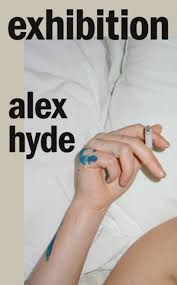
Inspired by the intoxicating 1990’s world of the Young British Artists movement, Exhibition by Alex Hyde tells the story of an intense decades long relationship between two women: photographer Rabble Stone, and an unnamed and now dead celebrity artist. In an absorbing tale that encompasses the Cool Britannia era, female friendship, the concept of muse, sacrifice, and things left unspoken, Rabble addresses her friend directly, recalling the twists and turns in their relationship, from a student house share in Brixton to the heights of YBA stardom in London and New York.
The opening line of the novel comes from an auction house, where Rabble tells the dead artist, ‘As soon as you died, you were worth ten times the price’, more famous than she ever was in life. Now managing her friend’s artistic legacy, Rabble has come a long way from the early days of their Brixton houseshare and cosily triadic friendship with fellow student, posh, sensitive, ill-starred Duncan.
She recalls the first winter in her rented room, toadstools blooming in the cracks of the walls, being invited to share the artist’s room cum studio while the temperamental boiler is fixed. Here is where the artist’s magic happens, figurative drawing that’s about to branch out into video, installation, conceptual explorations.
Rabble already recognises the burgeoning talent, ‘I knew you had something no one else did, saw how you’d caught the line, the form; watching you through the slit of your bedroom door’.
It’s here that the artist first asks Rabble to take her photograph, an extraordinary chemistry between them producing a sequence of shots that the artist wishes to claim as self-portraits and use for her graduate show. Rabble agrees, Duncan wonders just who is the artist and who the muse, and the future is written.
This is such an intelligent and considered novel. Hyde explores various themes within her evocation of the infamous YBA scene (inspired in particular by the work of Tracey Emin and Sarah Lucas). These artists were boldly experimental, interested in the concept of the self as art, and what’s more, they were entrepreneurial, qualities inherent in Hyde’s artist.
Of the three friends, Rabble is the only one from a working class background. Duncan has a private income, the artist is from a wealthy family. She notices that her friends lap up her stories of growing up on a Manchester housing estate, ‘You couldn’t get enough. The real deal: common people, fag ends, trash’. She often thinks the artist is toying with that image for herself (fans of 1990’s Brit Pop will recall the lyrics from the brilliant Pulp song, Common People, about just that phenomenon).
Intimidated, fascinated and perhaps seduced, Rabble has yet to pinpoint her own work’s distinguishing feature (or USP as we’d call it now). Despite Duncan’s foreboding, the day she first ‘captures’ the artist on camera, may have heralded its discovery.
Although the reader is aware that the artist’s death is coming down the line, the eventual manner of it is conversely unpredictable and shocking. Hyde has worked hard throughout to keep us guessing and ruminating and succeeds admirably.
Exhibition by Alex Hyde is published by Granta, 256 pages.
[newletter]