


Classics

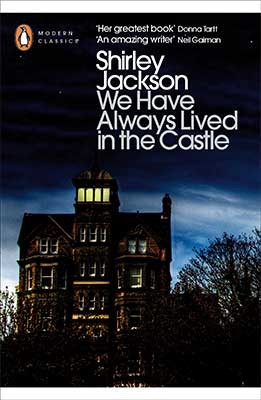
We Have Always Lived In The Castle by Shirley Jackson

Review by

We Have Always Lived in the Castle

An American house of horror

I’m finding that bitesized, escapist fiction suits my concentration levels these days and We Have Always Lived in the Castle by Shirley Jackson, perfectly fits the bill. The story of two mysterious sisters living with their ailing uncle in a grand, ivy-covered Vermont house is unsettling from the word go. We Have Always Lived in the Castle was Jackson’s – the American queen of ghost and horror stories – last and, many think, best novel.

Read full Review

The Bell Jar by Sylvia Plath

Review by

The Bell Jar

A feminist mind unravels in this intense American classic

Esther Greenwood hasn’t washed her hair for three weeks. Personal hygiene seems futile when the days glare ahead ‘…like a white, broad, infinitely desolate avenue.’ This sombre path is walked by one of literature’s most infamous characters in The Bell Jar by Sylvia Plath. The iconic writer’s portrayal of a young woman’s mental breakdown ties in perfectly with our Read With Your Teen challenge. Time to put your preconceptions on hold while sharing cross-generational thoughts on the novel’s oft-cited morbid self-obsession and stirring feminist observations.

Read full Review

Rebecca by Daphne du Maurier

Review by

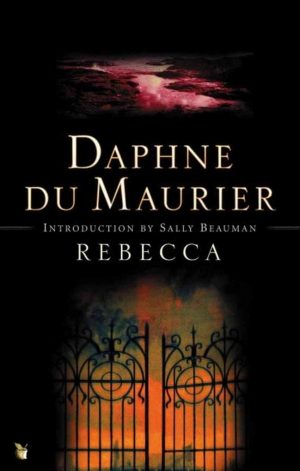
Rebecca

An extraordinary psychological thriller

Can’t think of a better escape right now than the 1938 novel Rebecca by Daphne du Maurier, a glorious cocktail of jealousy, obsession, opulence and mystery. Our modest, unglamorous heroine works as a companion to a well-healed woman on holiday in Monte Carlo. There she meets the wealthy, dashing widower Max de Winter and an unlikely relationship begins. They marry and return to Manderley, de Winter’s palatial estate in England, where the ghost of de Winter’s dead wife Rebecca and the ghoulish housekeeper Mrs Danvers rule. An extraordinary psychological thriller.

Read full Review

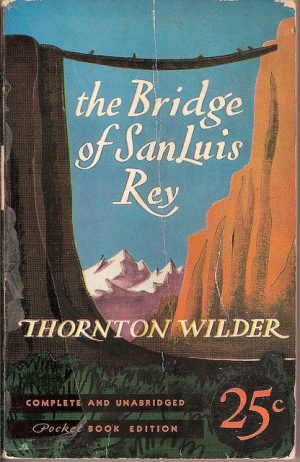
The Bridge of San Luis Rey by Thornton Wilder

Review by

The Bridge of San Luis Rey

A small book about the big things in life

Five people plunge to their deaths when an old Inca bridge across a gorge in Peru snaps. Who were these people? And why these five? That’s what Brother Juniper, a Catholic priest, sets out to investigate in the glorious little novel The Bridge of San Luis Rey by Thornton Wilder.  ‘Either we live by accident and die by accident, or we live by plan and die by plan’ Brother Juniper reasons. So which one is it?

Read full Review

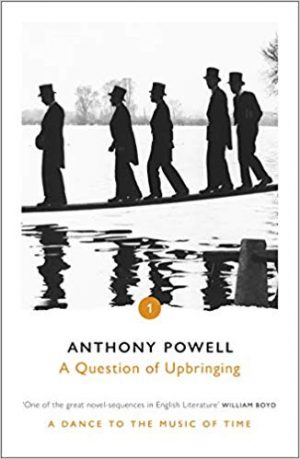
A Dance to the Music of Time by Anthony Powell

Review by

A Dance to the Music of Time

An extraordinary literary marathon

A Dance to the Music of Time by Anthony Powell is a 12-volume sequence of novels that has been lauded as one of the greatest works of 20th century English literature. The books start in the late 1920s and take us up to the 1960s, feature a huge cast of characters and offer a remarkable vision of changing social history, a deftly sustained narrative, some wonderfully memorable characters and a stark vision of the impact that time wreaks on our lives.

Read full Review

The Birds by Tarjei Vesaas

Review by

The Birds

A compassionate portrait of a struggling everyman

None other than Karl Ove Knausgaard, Norway’s greatest literary export since Ibsen, has provided the endorsement quote on the reissued English edition of The Birds by Tarjei Vesaas, stating that it is ‘the best Norwegian novel ever.’ Vesaas (1897-1970) is still considered one of the country’s most important writers, and is now deservedly being published in English as part of Penguin Modern Classics. (PS never mind the hipster on the cover. I’m certain this is not how Vesaas envisioned Mattis). Read full Review

Review by

Need something to cuddle up with this January?

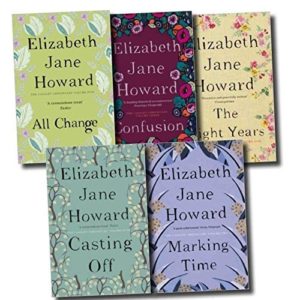
Try the delightful Cazalet Chronicles - Jane Austen meets Downton Abbey

I was inspired to pick up The Cazalet Chronicles by Elizabeth Jane Howard after hearing snatches of the Radio 4 a while ago, and reading reviews of Artemis Cooper’s biography of the author – about whom I knew little apart from the fact that she was unlucky enough to have been married to the old devil himself, Kingsley Amis. How glad I am that I did, particularly in the dying days of this particularly dismal year. The experience of reading the Cazalet series (The Light Years, Marking Time, Confusion, Casting Off and All Change) is like stepping into a warm bath. Comforting, life-affirming, immersive – and you absolutely don’t want to pull the plug.

Read full Review

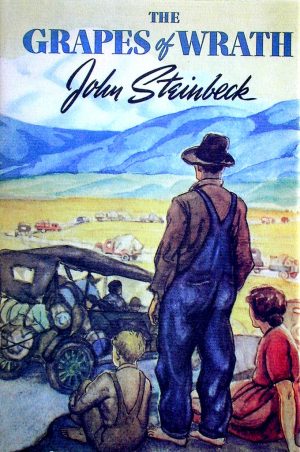
The Grapes of Wrath by John Steinbeck

Review by

The Grapes of Wrath

A classic worthy of a re-read

The Grapes of Wrath by John Steinbeck somehow slipped through the cracks for me. I’ve spent the summer rectifying this and I can see why this novel has become such an enduring classic and a favoured choice amongst English teachers. The story of the Joad family, uprooting from their arid Oklahoma farm, fleeing poverty and industrialisation of farming in search of the American Dream is beautifully told, incredibly moving and a highly effective piece of political propaganda. If you haven’t read it yet, do. If you have, perhaps it’s time for a re-read?

Read full Review

Review by

The Moon is Down

A fascinating piece of war time propaganda

The story behind The Moon is Down by John Steinbeck World War II novel is as fascinating as the book itself. Steinbeck, a world famous author by the start of the war, was deeply concerned about the rise of Fascism in Europe. He’d noticed the Fascists’ clever use of propaganda and urged the precursor to the CIA, for whom he worked, to create their own. In 1941, Steinbeck wrote The Moon is Down, which is largely based on conversations with people who’d fled their occupied countries. The book would become one of the most read underground novels of the war, with thousands of copies printed clandestinely in France, Denmark, Norway, Belgium and the Netherlands. Judging by its success, it must have played a role in mobilising resistance and keeping up morale.

Read full Review

The Lost Estate by Henri Alain-Fournier

Review by

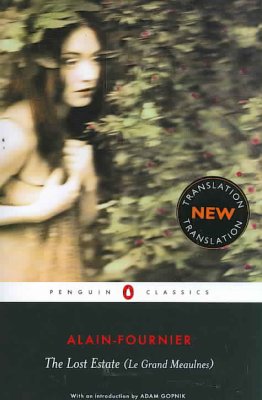
The Lost Estate (Le Grand Meaulnes)

A poignant evocation of those feverish days of adolescence

Our narrator, François Seurel, is the bookish son of a schoolmaster, residing in a provincial French village in the 1890s. Passive and impressionable, he yearns for adventure, but will never be the architect of his own life. When the charismatic adventurer, Augustin Meaulnes, comes to board at his home, Seurel’s life is changed irrevocably. A French classic, often described as the greatest novel of adolescence in European literature, The Lost Estate deserves to be more widely read on this side of the Channel.

Read full Review