Bookstoker Young Readers
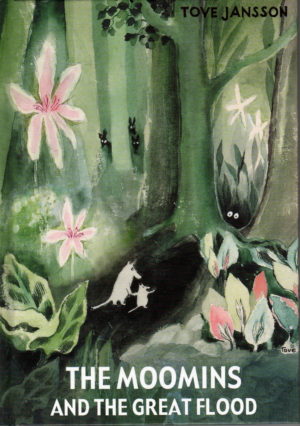
The Moomins and the Great Flood
Rediscovering Moomin magic

The Bombs That Brought Us Together
Costa Prize Winner fuels independent thinking
Welcome to Bookstoker!
We’re here to help you find that book that you can’t put down, the book you’ll push on all your friends, the book that’ll change your life.
We read literary fiction, non-fiction, classics and children’s books, all genres and styles embraced in our aim to share the love. You’ll also find fabulous Bookstagrams and literary news.
A world of bookish delights!
Kirstin and Julie



This beautiful book is the very first story in the famous and beloved Moomins saga. With the Moominland exhibition at London’s Southbank Centre, and an upcoming retrospective of Tove Jansson’s art, it’s the perfect opportunity to rediscover their magic.
Read full Review
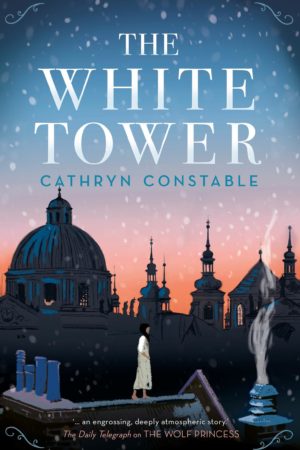
The White Tower tells the story of Livy, a lonely, bereaved girl, trembling on the edge of adolescence. When her father becomes the librarian at ancient, hallowed Temple College, Livy is granted a scholarship there. A marvellous tale of alchemy, magic, and villainy unfolds.
Charlie lives in Little Town, under a corrupt and repressive regime. His friend, Pavel, is a refugee from hostile, neighbouring Old Country. When the inevitable bombs come, the boys are drawn into a chain of dark and traumatic events, that threatens not only their friendship, but also life itself. This isn’t a book I’d ordinarily be drawn to but I feel rewarded for stepping outside my comfort zone.
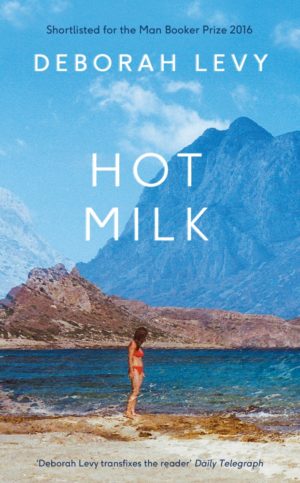
Rose and her daughter Sofia arrive in a small Spanish fishing village – a strange, dreamlike place caught between the searing heat of the desert and the mesmerising pull of the sea. They are desperately seeking medical help and salvation. Rose suffers from a mysterious, inexplicable illness, which presents in spontaneous, spasmodic paralysis of her legs and has left her wheelchair bound. Her daughter, Sofia, has spent her life trying to understand her mother’s illness, trapped in an unhealthy co-dependent relationship and forced to act as her bemused carer. The mystery of this undiagnosed illness forms the background of the entire novel. Sofia explains, “I have been sleuthing my mother’s symptoms for as long as I can remember. If I see myself as an unwilling detective with a desire for justice, is her illness an unresolved crime? If so, who is the villain and who is the victim?”
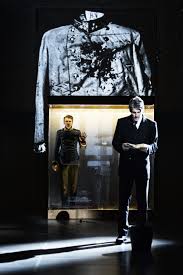
Austrian short-story maestro Stefan Zweig (Twenty-Four Hours in the Life of a Woman, Chess, Letter From an Unknown Woman and Fear) also wrote two novels: The Post Office Girl and Beware of Pity. Beware of Pity has now been made into a play by Simon McBurney, creative genius and head of the experimental theatre company Theatre de Complicite, which is showing at the Barbican in London 9-12 February. I cannot recommend Simon McBurney’s productions highly enough. They are without doubt amongst the most original, intelligent and spectacular theatre you will see. If you can’t get tickets the play is available on live streaming from the Barbican. I’ll certainly watch it.

James Wood’s annual list of new book discoveries seems shorter this year but his description of Joy Williams’ Ninety-Nine Stories of God made even me (not usually a short story fan) want to pick it up. Perhaps you too will find something here?

Yes, the Booker Prize winning The Sellout is a funny book, a book that makes you laugh (sometimes guiltily), a stinging satire devoid of political correctness that goes to the heart of America’s race relation problems. Sadly, it’s also a novel that somehow lacks direction; that appears to go nowhere, in which the author occasionally seems to revel in his own jokes. It’s packed with cultural references that I struggled to understand and I suspect I’m not the only one. For the last reason alone, it’s a puzzling choice as the first American winner of the British based Booker Prize since their rules were changed to include American books a few years ago.

Ready to escape the grey, cold winter for a few hours? Try this sensual and sensuous Italian classic set in the 1860s amongst the arid hills, frescoed palazzos and turquoise seas of Sicily. It’s the story of the aristocratic Salina family’s decline, of ageing and mortality, of politics and passionate love all mixed up into a fabulous Italian literary feast.

President Obama, interviewed by chief book critic of The New York Times Michiko Kakutani, talks about books and how they help ‘exercise the muscles’ that allow us to imagine what’s going on in the lives of other people. An interview worth reading.
Transcript of The New York Times Interview with President Obama