

News by Julie
Best Books of 2026
This has been a year of adventurous fiction, many of them by interesting debut authors. The subject matters on the list of our favourites this year are wide-ranging: from a light-hearted Miss Marple tribute to an account by a front line Ukrainian solider. Some of our old time favourites are also back: Maggie O’Farrell, Lauren Groff, and Sigrid Nunez. There have been some punchy non-fiction books as well this year, with divorce, murder and toxic masculinity as topics, and gripping a read on parasites (who knew they could be so interesting…). And last but not least, some books for the little people in our lives. We hope you like our selection.
Fiction
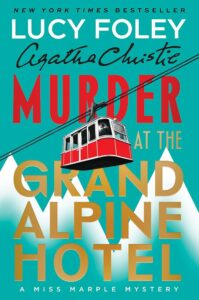
2026 marks fifty years since the death of Dame Agatha Christie and the posthumous publication of her last Miss Marple detective story. Since then, the legendary Jane Marple has been portrayed countless times on screen and stage, knitting needles click-clacking as the imperturbable elderly sleuth solves yet another crime. Murder at the Grand Alpine Hotel by Lucy Foley is the first Marple continuation novel. On holiday in a luxury hotel in the Swiss alps, Marple steps in when a fellow guest is murdered. Written with wit and élan, abuzz with drama and red herrings, Foley’s first Marple outing is the perfect weekend sofa read.
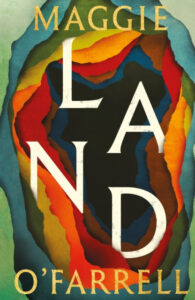
Maggie O’Farrell’s latest novel Land is set in 1840s Ireland during the aftermath of the Irish Potato Famine. Tomás is a dirt poor map maker working for the British colonisers. While surveying the land, accompanied by his ten year old son Liam, Tomás has an ephipany which makes him question both his job and his religion. At home is a pregnant, hardworking wife and two hungry daughters. What follows is an epic family drama, where the desire to escape is front of mind for all involved. Apart from being a stellar storyteller, I can’t think of any contemporary writer who writes as evocatively and convincingly about domestic life as O’Farrell. Depressing as it sounds, this is a fabulous read.
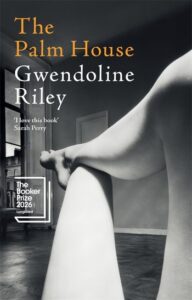
Laura Miller, the protagonist of Booker Prize long-listed The Palm House by Gwendoline Riley, has an unfortunate tendency to become trapped in awkward, sometimes dangerous situations. Be it with her cold, bossy mother; her flaky landlord; and, most devastatingly, with a celebrity comedian who sexually abuses her (yes, they exist in fiction too). In her pared-down style, Riley captures these moments with chilling clarity. We feel what Laura feels. Add some outstanding dialogue, and you have a novel well worth reading.
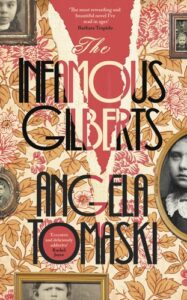
A splendidly eccentric debut novel, The Infamous Gilberts by Angela Tomaski tells the story of the once illustrious Gilbert family through the eyes of their elderly retainer, Maximus. Welcoming the reader as a curious visitor, Maximus takes us to Thornwalk, the now deserted and decaying family estate, his final tour before relinquishing the keys to the inevitable luxury hotel developers. Each room, nook and discarded item he introduces us to prompts revelations of scandal, perfidy, and more than a dash of insanity; the Gilbert loves and losses set against a twentieth-century backdrop defined by the reverberations of war and the decline of the great English country house.
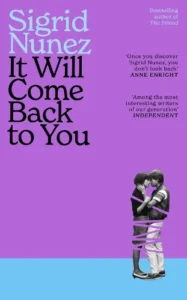
It Will Come Back to You by Sigrid Nunez has been one of this year’s many highlights. If the name doesn’t ring a bell, you have something to look forward to. Nunez’s National Book Award-winning novel The Friend still lingers in my mind. It Will Come Back to You is a collection of short stories written throughout her 30-year career. Her writing is deceptively simple, perceptive and very funny, with themes ranging from puberty to dementia, via mother-daughter relationships, an airport nightmare and a couple of dark sexual obsessions, one of which ends in murder. As The New York Times writes, these are “stories that remind us why Sigrid Nunez is one of our best writers”. True indeed.
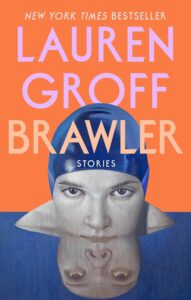
Anyone who loved the novel Matrix—a book I still think about—will leap at recently published short-story collection Brawler by Lauren Groff. Groff’s incredible range is on full display in this engrossing collection. We travel from the East Coast to Southern California, from Boston aristocracy to Los Angeles trailer parks. The settings vary, but the family troubles remain the same, as does the capacity for both good and evil.

Fierce, street smart, and laced with dark humour, Reservoir Bitches by Dahlia de la Cerda is a literary adrenaline shot; thirteen blistering and brilliant tales of contemporary Mexican womanhood, from an activist and debut writer whose theme here is women who live with violence. With a cast of characters spanning the social scale (aging seamstress ‘spinsters’ traumatised by the degradation of their once nice neighbourhood, an impoverished young woman contemplating a lonely abortion, a wealthy narco heiress running her father’s empire), De la Cerda shows us the lengths these women will go to to survive.
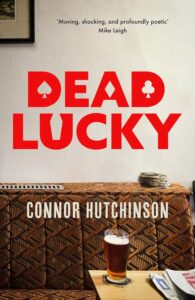
The most original debut we’ve read this year, Dead Lucky by Connor Hutchinson tells the story of twenty-something Jamie, a funeral embalmer leading a chaotic double life in a Manchester suburb. Although dedicated to his job and in love with his fabulous girlfriend, Rebecca, Jamie is harbouring a secret which threatens to capsize his life. Addicted to gambling, on the edge of financial ruin and under pressure from Rebecca to purchase their first home together, Jamie needs to pull off a major win. By turns darkly funny and affecting, Dead Lucky invites us into the mind of a young man, who unable to share his troubles with those who love him, tells them to the corpses on his embalming table instead.
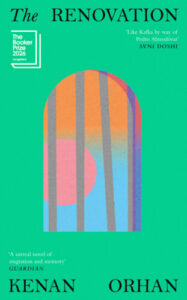
Dilara is a Turkish exile, living in Italy with her husband and her ailing father, a blacklisted political academic who is gradually succumbing to dementia. Having fled President Erdoğan’s oppressive regime, the three of them have led a comfortably uneventful life for some years. When Dilara hires some builders for a renovation, she is astonished to discover that in place of the expected swish new bathroom, they have installed a Turkish prison cell, a sesame-scented portal to their much missed homeland. A wonderful exploration of memory, captivity and exile. The Renovation by Kenan Orhan is yet another gem on this year’s excellent Booker Longlist.
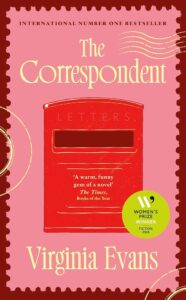
A huge hit this summer, Women’s Prize for Fiction winner The Correspondent by Viriginia Evans can also be enjoyed now. A perfect page-turner, both light-hearted and serious, the novel is a series of letters, sent and received by the septuagenarian Sybil Van Antwerp. Sybil beautifully masters the art of letter writing and makes us all yearn for the days we wrote and received them ourselves. Through 11 years of correspondence with family, friends and a selection of random people, we get to learn about the ups and downs of Sybil’s life. A lovely, moving and melancholic book.
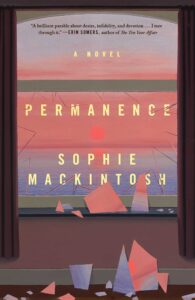
Clara and Francis are lovers, partners in a spectacularly ardent adultery. No strangers to the pleasure of an anonymous hotel room, they go to great lengths to conceal their affair from Francis’s wife and young daughter. One day, the hotel room they wake up in is unfamiliar to them both and they have no recollection of arriving there. In Permanence by Sophie Mackintosh, we’re spirited away to a paradisal parallel world of endless blue skies and aphrodisia, populated entirely by adulterers. Here, Clara and Francis can celebrate their love openly. Is this freedom at last or an uncanny case of be careful what you wish for?
Non-Fiction
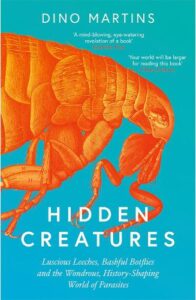
One of our favourite books of the year to date, Hidden Creatures by Dino Martins takes us on a journey into the enigmatic world of parasites. These unsettling critters are camping out on practically every square inch of our planet, frolicking in our intestines, gorging on our blood and nibbling away at our animals. We join Dr Martins, often in the company of his eager students, crossing continents and studying them at depth, from the tiniest tick to the largest parasitic worm. Filled with both gloriously poetic descriptions of the natural world and thrillingly repulsive accounts of parasite behaviour, it’s a unique and fascinating read.
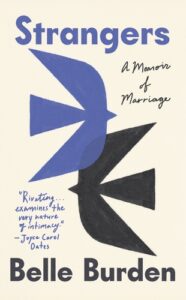
On the face it, the premise of Strangers by Belle Burden might repel some readers. A Waspy, privileged, New York woman is suddenly left by her successful, hedge fund husband. What’s new? you might think. That was my reaction too, however, as I started reading I was won over by Burden and her portrayal of grief, confusion and loneliness. Sure, millions of women around the world have been in a lot more dire straits than Burden, but the trauma of being abandoned is universal.
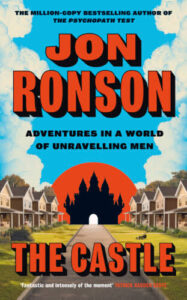
The Castle: Adventures in a World of Unravelling Men by Jon Ronson. Ronson writes books about the same dark corners of the world that Louis Theroux explores in his documentaries. This time, his subject is toxic masculinity, anti-wokeness, shouting on social media, male anger, sexual deviancy and just plain weirdos. The Castle: Adventures in a World of Unravelling Men by Jon Ronson takes us deep into a world whose contours we glimpse in the comments sections on social media. It’s ugly, shocking, utterly mad – and at times, very, very funny.
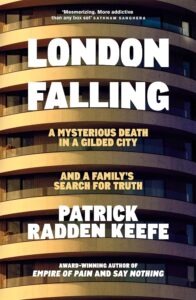
You might have heard about 19-year-old Zac Brettler’s death falling from a Thames luxury apartment block. Police ruled it to be suicide – MI6 surveillance cameras from across the Thames showed he jumped. Zac’s parents were not so sure. Determined to find out what happened and with the help of an investigative journalist, they start digging. What they unearth will leave you gobsmacked. London Falling by Patrick Radden Keefe is a gripping non-fiction book: well-researched, well-written, an almost unbelievable story and, ultimately, deeply sad.
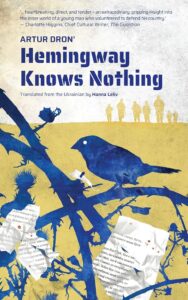
If you want to do one thing for the long suffering Ukranians this Christmas you can spend the time it takes to read the incredible Hemingway Knows Nothing by Artur Dron’. It’s not going to change their lives, but at least you will hear their story. Dron’ volunteered to join the Ukranian Army in 2022 following Russia’s invasjon. His experiences on the front line are as harrowing as any First or Second World War story you’ve read, and it is happening right now. He writes movingly about the camaraderie amongst the soldiers, the lottery of who survives and who doesn’t, the injuries, how his own faith keeps him going and the difficult moments when faced with civilian life. His anger with how the enemy has been portrayed by authors like Hemingway is palatable. Warning: this book will make you cry.
Children’s Books
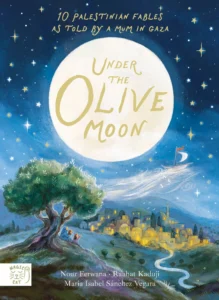
Under the Olive Moon by Nour Ferwana and Maria Isabel Sánchez Vegara (5-8 Years). This gorgeous collection of Palestinian fables comes to us from Nour Ferwana, a story-telling mother who lives with her family in a tent on the Gaza Strip. In her foreword, Nour explains why life in Gaza is not easy and how every evening she shares these tales with her daughters. Accompanied by vibrant, jewel-toned illustrations by Raahat Kaduji, Nour’s stories are rich with notions of care, sharing and hope. We join amongst others, a fisherman in peril, a journey to the moon in a silver boat, and our favourite, The Boy and the Strange Fruit, where a young boy’s discovery leads to full, happy bellies.
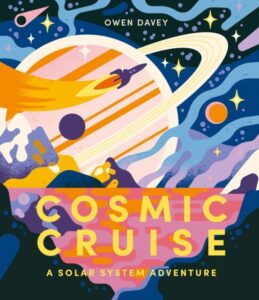
Cosmic Cruise – A Solar System Adventure by Owen Davey (5-8 Years). A launchpad to the stars, Cosmic Cruise takes us beyond the moon to the farthest reaches of our solar system. We begin with the basics: a hefty spacesuit that can take up to 30 minutes to put on and contains water, oxygen, gold-lined sunglasses to protect from sun-glare and yes, even a jet pack! Highlights include jumping on Mars, where weaker gravity means you can bounce up to three times higher than on Earth, hitching a ride on an asteroid belt, and learning to differentiate space rocks. A great gift for budding astronauts and scientists.
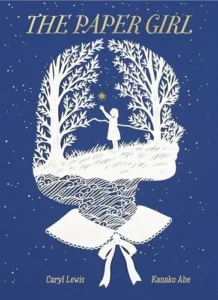
The Paper Girl by Caryl Lewis (7-11 Years). This is the captivating story of a girl made entirely from paper. Being sweet-natured and eager to please, she always does as she is told but it never seems to be enough. When told she should be beautiful, she folds her paper-self into a flower. Her elders find fault. When told she should be clever she transforms into a fox. Again, not good enough. How the paper girl learns to stand up for herself makes for a heartwarming tale of transformation. Illustrator Kanako Abe has created a miniature work of art with her intricate papercut techniques. An absolute gem.
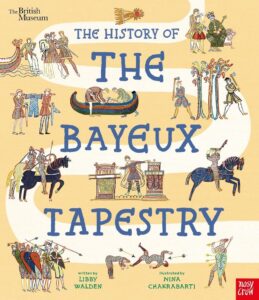
The History of the Bayeux Tapestry by Libby Walden (7-11 Years). Publication of this British Museum gift book happily coincides with the museum’s current exhibition of the Bayeux Tapestry (the first time the Tapestry has been displayed outside of France in almost 1000 years). Young history buffs will be intrigued by its story, what it’s made from, how and why it was created, and who its embroiderers were. Walden provides some excellent details: did you know that if a character is depicted with a moustache they are probably English? Or that in battle scenes, the Normans are on horseback, the English usually on foot? A timely and fascinating read.
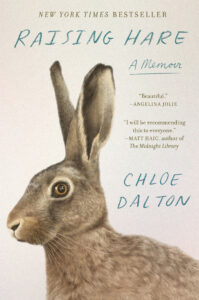
Raising Hare (Children’s Edition) by Chloe Dalton (8-11 Years). Adult readers may remember Chloe Dalton’s wonderful bestselling 2025 memoir about raising a lost baby hare (leveret). In this inspired illustrated children’s version, Chloe retells her story, how on a countryside walk one day she discovers the leveret, which had been chased away from its mother by a dog. It’s a steep learning curve as Chloe hand rears the tiny creature and prepares it for reintroduction into the wild. A tale of joy and discovery, including some great hare facts and a lovely postscript by Sir Michael Morpurgo.
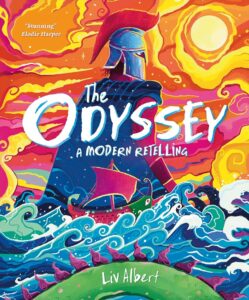
The Odyssey: A Modern Retelling by Liv Albert (8-11 Years). 2026 has been a good year for the Homerian epics, chiefly The Odyssey; Christopher Nolan’s sweeping film adaptation reigniting public interest in Homer’s original narrative poems. Liv Albert’s splendid retelling of Odysseus’ 10-year journey home after the fall of Troy succeeds in staying admirably true to Homer’s vision, both in terms of mythology and history. Albert is also keen not to airbrush out some of Odysseus’ less heroic or violent deeds but relates them in an age appropriate way. Complete with maps and fact files, this retelling is blessed with some gorgeously vivid illustrations by Hazem Asif.
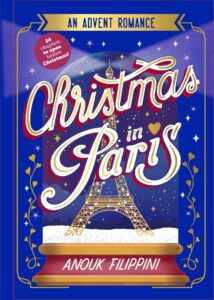
Christmas in Paris by Anouk Filippini (Teen/ Young Adult). Billed as an advent romance, this fun festive mystery is presented in 24 sealed chapters, to be read one-a-day in the run up to Christmas. It tells the story of Suzanne, an apprentice at a prestigious Parisian bakery. When Suzanne discovers a woman lying on the floor with an unctuous red substance on her jacket, she initially thinks it must be coulis, her pastry chef brain pondering the perfect coulis recipe. It is, in fact, blood. A murder has been committed and Suzanne finds herself caught up in a crime investigation. Add a dash of romance to the tale and here you have the perfect holiday sofa read.
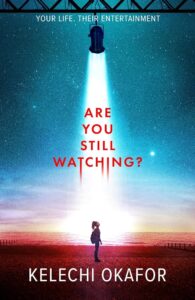
Are You Still Watching? by Kelechi Okafor (Teen/ Young Adult). The year is 2032, Dorca is on the cusp of a new life at university when the craziest thing happens: an alien communication telling her that her life thus far has been a reality show broadcast across the galaxy. Unfortunately her audience ratings have plummeted and if she doesn’t do something spectacular, she’ll be cancelled. Okafor’s clever dystopian tale explores themes of surveillance, politics and AI and she asks the question ‘Who do we actually exist for?’. A thought-provoking and original speculative fiction novel.
For more inspiration, check out these lists:
The Financial Times – Best Books of the Year (subscribers only)
The New York Times – 100 Notable Books of 2026 and Which Notable Books of 2026 Should I Read First? (subscribers only)
Booker Prize for Children – first short-list ever!