


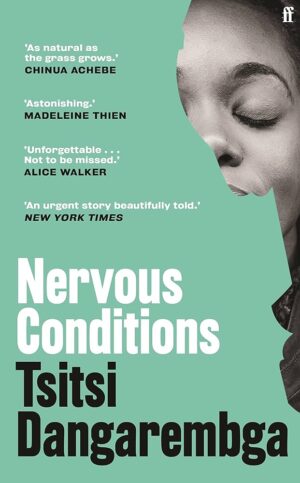
Rare is the book that becomes an instant classic but that was the case for Nervous Conditions by Tsitsi Dangarembga when it was published in 1988. Set in 1960s and 70s in what was then Rhodesia, it’s the coming-of-age story of Tambu, a gifted girl from a dirt-poor farming family who defies her gender and class to be allowed an education. Nervous Conditions was the first book published in English written by a black Zimbabwean woman and its feminist outlook, inspired by Germaine Greer’s The Female Eunuch, revolutionary in itself. A fenomenal portrayal of misogyny, colliding cultures, colonialisation and class.
It’s Tambu’s brother’s death that paves the way for her schooling. While her mother is consumed by grief, Tambu has less tears to shed for her entitled brother. Reluctantly, her uncle Babamukru, who runs the affluent mission school, lets her take his place. A new world of middle-class domestic life, in stark contrast to her family’s impoverished rural homestead, is unveiled for Tambu.
Babamukuru, his wife aunt Maiguru and their two girls, Nyasha and Chido, have recently returned from England where Babamukuru has been educated and Nyasha has picked up Western habits and attitudes which will get her into trouble. Babamukuru and Nyasha clash, sometimes violently, as he struggles to put her back into the gender ‘box’ and make her abide his patriachical rule.
Tambu is in awe of her moody, sophisticated cousin Nyasha whose refusal to obey both fascinates and scares her. Despite their differences, they become friends, Nyahsa introducing Tambu to sophisticated literature and Western ways of thinking, Tambu providing a shoulder to cry on when Babamukuru rages against her.
Misogyny is systematic in every aspect of life of Rhodesian life. Schooling is reserved for boys, housework for girls. Marriage is the only pursuit worth making and once there, childbearing, endless housework and unfaithful husbands await.
“Can you cook books and feed them to your husband? Stay in the garden and dig.”
This dismissal, delivered to Tambu early on, sets the stage for her lifelong rebellion against a world that wants her to stay small.
The novel is partly autobiographical, based on Tsitsi Dangarembga’s own early adult life. This lived experience shines through in convincing dialogue, nuanced and interesting characters and a setting that feels real. A very good read.
Nervous Conditions by Tsitsi Dangarembga is published by Faber & Faber, 304 pages.