

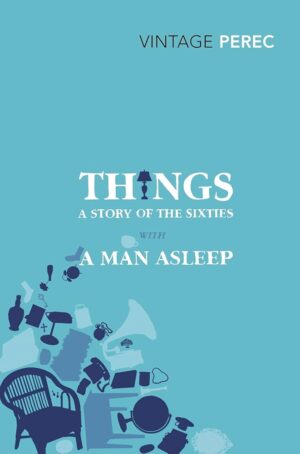
A 1965 cult read (reimagined for the 21st century by Vincenzo Latronico in his recent excellent novel, Perfection), Things: A Story of the Sixties by Georges Perec is a wry portrayal of post-war materialism. Chronicling the lives of a young Parisian couple, Jérôme and Sylvie, Perec shows us how they are served by their time and place in history. With the advent of mass advertising and the concept of ‘lifestyle’, a desire for stuff and more stuff has been ignited, yet Jéröme and Sylvie are determined not to join the 9 to 5 treadmill. They want to be free but are unaware that there’s always a price to pay.
The novel opens with a lengthy recital of all the objects and accoutrements the couple believe necessary in an ideal home (they currently live in a tiny, cramped apartment but are prone to idle fantasising of a future blessed with sophistication and affluence). Their dream home would have Scandinavian lighting, cut glass objets d’art, softened leather furnishings, a wishlist that seemingly stretches into infinity, interrupted only by the unwelcome reminder of their modest incomes.
Both employees in the bright new world of advertising, they work as market researchers, quizzing the public about their views on, say, vacuum cleaners or ready-made mashed potato.
‘Of course, like everyone else, they would have liked to give themselves to something…a vocation, an ambition…a passion that would have fulfilled them. But they possessed, alas, a single passion, the passion for a higher standard of living, and it exhausted them’.
Consumed by fantasies of the kind of lifestyle they read about each week in L’Express magazine, with its seductive advertisements and instruction in ‘the art of living’. They feel they deserve these rewards but are unwilling to put their noses to the capitalist grindstone.
Perec’s restrained, detached observational style never lets us into Jérome and Sylvie’s individual psyches. They come as a unit, a couple who symbolise a major cultural shift. He tells us about their like-minded group of friends, with their similar apartments and lifestyles, lively dinner parties held in tiny kitchens, bar-hopping nights of intoxicated conversation, an exhilarating sense of being young and free, accompanied by an utter disdain for anything as bourgeois as an executive career, with its pension schemes and engraved name-plates on the office door.
The group are bound by these values. Until they’re not. As they all hurtle towards thirty, one by one the friends begin dropping out of the group, in pursuit of money and security. Betrayed, Jérôme and Sylvie are forced to make a decision.
A provocative and cerebral read, Things brilliantly captures its era.
This edition includes A Man Asleep, Perec’s story of an apathetic young student who decides to withdraw from daily life and conduct an experiment in indifference. Understated and downbeat, it makes an excellent companion piece to Things.
If you like this, see also our review of Perfection by Vincenzo Latronico.
Things: A Story of the Sixties by Georges Perec is translated by David Bellos and published by Vintage Classics, 144 pages.