

American Literature

Review by

All the Light We Cannot See

A New York Times bestseller and winner of the 2015 Pulitzer Prize for Fiction

I loved this compelling, ambitious novel for several reasons: for Anthony Doerr’s ability to look afresh at this well-trodden period in history (World War II); for his ingenious plot and for his haunting, compelling prose and beautiful imagery. But mostly I loved it because it reminded me of the light and grace we are all capable of embodying. Doerr convinces the reader of the innate good in humanity, even at the most cruel and desolate of times.

Read full Review

Review by

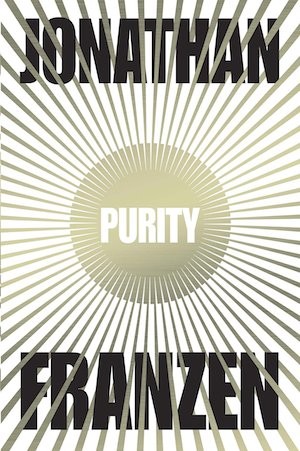
Purity

Uneven Franzen

It’s here! Genius declared ‘Great American Novelist’ Jonathan Franzen’s much anticipated new book Purity. In terms of compulsively readable, contemporary fiction with depth and humour, his last book Freedom was up there amongst the very best for me. Perhaps my expectations were too high, perhaps Purity is not as good as his two previous best-sellers The Corrections and Freedom, or perhaps you will disagree with me, but despite moments of brilliance, I found Purity to be an uneven book, oscillating between Franzen-esque genius and rushed, flat, even – dare I say it – boring writing.

Read full Review

Review by

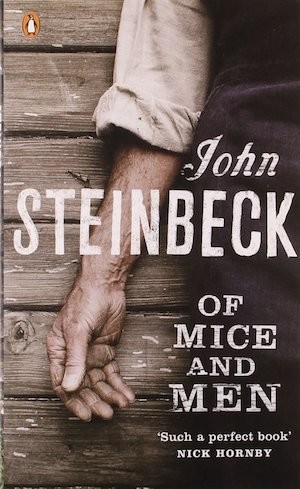
Of Mice and Men

A classic worth re-reading

I’d forgotten how good John Steinbeck’s classic Of Mice and Men really is. Just re-read it after many years and what a gem of a little story! In a mere 120 pages, Steinbeck dives deep into themes such as loneliness, dreams and loyalty while portraying the nomadic lives of ranch hands in America during the Great Depression. To top it off are the most exquisite descriptions of landscapes and farm life.

Read full Review

Review by

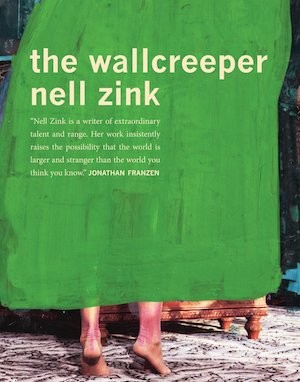
The Wallcreeper

Zink's novel fails to float

Always on the lookout for something truly original, I was tempted by Nell Zink’s (just the name!) eccentric sounding book The Wallcreeper.

Read full Review

Review by

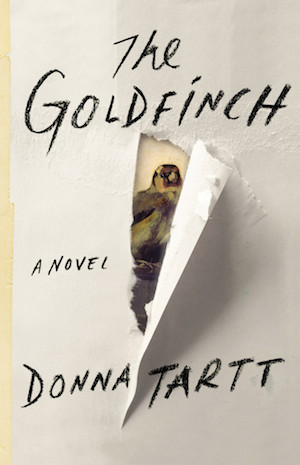
The Goldfinch

A success, and enjoyable in its own right, but a disappointing Pulitzer

There has been a lot of hype about this book and some very polarising reviews. Comparisons have been made to Dickens – which likely refer more to the rather convoluted and dramatic storyline (Oliver Twist’s endless “mishaps” for example), and improbable rescues, than the style or language of writing. Donna Tart’s strength in fact is (as she has shown us with The Secret History) her ability to inhabit a younger voice with credibility and she does not fail us here, wielding her secret weapon – great dialogue – with pace and reality. We like Theo for all his self-absorption and watch the oncoming twists and falls that meet him on the way with mixed dread and hope. It is not without its faults – unlikely plotline convergences (what a coincidence!) and the last pages would have benefited from some heavy editing as it descends into syrupy philosophy (“We can’t escape who we are”) but it is nevertheless a book worth reading. From the first calamitous event, we are pulled along the roller-coaster story: gripping, achingly sad, action-packed, fateful, and very unputdownable.


Review by

God Help the Child

Veneer from venerable Morrison

It’s rare these days that I wish a book were longer, but that’s what I did with Nobel laureate Toni Morrison’s latest book God Help the Child (to be published on 23 April). For the wrong reasons, unfortunately. Morrison’s writing is beautiful, as always, but this novel about child abuse felt like a thin veneer of a story. One in which I constantly wanted to scratch the surface for more information.

Read full Review

Review by

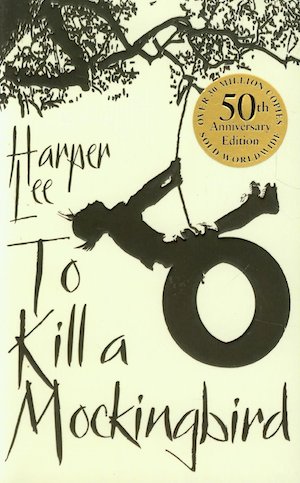
To Kill a Mockingbird

Still good after all these years

There’s something wonderfully innocent and warm about this 1950s classic, despite its dead serious subject matter of racism. Life is simple; the goodies are good, the baddies are bad. Fundamentally, the book is about tolerance, for the lonely, weirdo neighbour, for the sick, angry, old lady down the road and, of course, for blacks, otherwise ostracised by 1930s Alabamian white society. I read this book 20 years ago and found it a joy to re-read, although my older more cynical self did think it a bit sentimental at times.

Read full Review

Review by

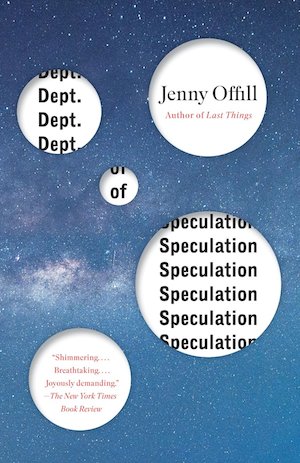
Dept. of Speculation

Snapshots of a marriage

Jenny Offill’s little gem of a book Dept. of Speculation was on The New York Times’ list of 10 best books of 2014, and with good reason. It’s an unusual novel, written in snapshots, in much the same fragmented way our memory works. It’s the sum of those memories that create the narrative of our past or, in this case, the story of a relationship. In Dept. of Speculation, Offill tells an age-old tale in a refreshingly new way and creates something truly different.

Read full Review

Review by

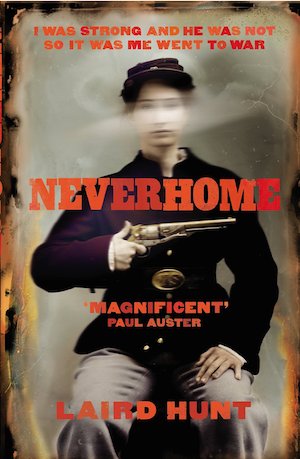
Neverhome

An explosion of a novel

In Laird Hunt’s gripping novel Neverhome we meet Constance, aka Ash Thompson, who joins the American civil war disguised as a man. ‘I was strong and he was not, so it was me went to war to defend the Republic’, Ash says matter-of-factly referring to her mild mannered husband Bartholomew. And no, it’s not my spelling mistake in this opening sentence, it’s Ash’s. Ash is a simple farmwoman who dreams of finding the first lilac in spring. She’s also happens to be a take-no-prisoners sharp shooter. Ash joins the war out of a sense of duty, at least that’s what she tells us. Soon we see the contours of a troubled past in this very human portrayal of a tormented woman in a man’s world.

Read full Review

The Signature of All Things by Elizabeth Gilbert

Review by

The Signature of All Things

Great storytelling with humour and ambition

I never thought I’d get excited by a novel about botany, but The Signature of All Things proved me wrong. Firstly, Elizabeth Gilbert is an outstanding storyteller: funny, insightful and ambitious. Equally compelling is the novel’s unlikely heroine, Alma Whittaker, a multi-layered and unusual character and a woman with a brilliant scientific brain born in the wrong century.

Read full Review