

Bookclub Reads

Review by

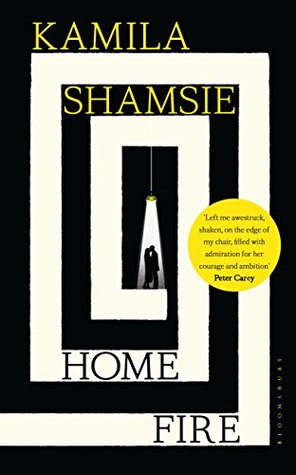
Home Fire

When the personal becomes political

Two Muslim families collide in Kamila Shamsie’s Home Fire; one from a wealthy, privileged, political family, the other from Wembley’s poor immigrant community. Eammon, son of British Pakistani Home Secretary, Karamat Lone and his glamorous American designer wife, Terry, falls head over heals in love with Aneeka, orphaned Pakistani girl with Jihadi father and brother. Interesting premise for a story and fertile ground for moral dilemmas and culture clashes. Shamsie keeps the suspense and gripping love story moving at an impressive pace. Shame, then, that the ending feels contrived. I blame it on Sophocles.
Read full Review

Review by

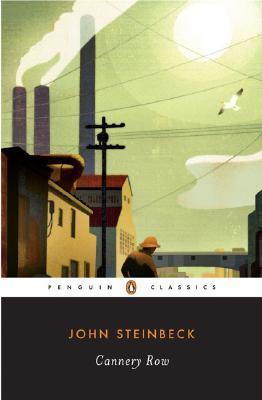
Cannery Row

A little book to make you happy

I’ve just been through one of the longest good book ‘droughts’ in my reading career. In the end I decided to reach for a classic, sometimes the only way out, and grabbed hold of John Steinbeck’s Cannery Row. It’s a short book that is more like a portrait of a community than a linear narrative, but within it are sublime little stories, descriptions of people, places and atmosphere that only an old hand like Steinbeck can conjure up.

Read full Review

Review by

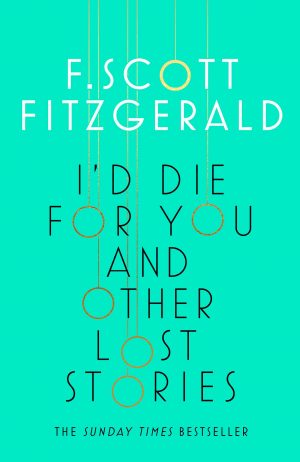
I’d Die for You and Other Lost Stories

‘A basket of many coloured skies’

This is a beautifully produced scholarly edition of 18 of Fitzgerald’s short stories, none published in his lifetime. Varying in length from three pages to thirty, these stories are peopled not so much with the glamorous but damaged Jazz Age characters familiar to us from his novels but with a poorer, sadder, post-Depression cast including drunks, travelling salespeople, hypochondriacs, divorcing couples, movie producers, starlets, has-beens, and – overwhelmingly – the unwell. The best of these stories glitter with the author’s wit and familiar ability to demolish a character’s pretentions in a sentence. The others, more plodding, will appeal nevertheless to Fitzgerald fans for the light they shine on his preoccupations and problems, and for the glimpse they afford into the seedier side of 1930s small-town American life.

Read full Review

Review by

The Power

F**k the Patriarchy

A clever imagining of a world in which women (literally) have the power, this Baileys-shortlisted novel blends science fiction with dystopian global politics. Think The Hunger Games meets late Jeanette Winterson with a dash of Malory Blackman, this is a book your teenage daughter will love.

Read full Review

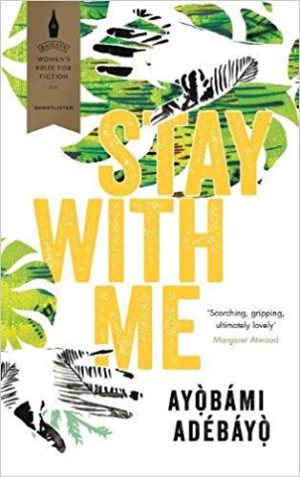
Stay With Me by Ayobami Adebayo

Review by

Stay With Me

Not flawless but pretty impressive nonetheless

Yejide and Akin fall head over heals in love when they meet at university in Ife, Nigeria in the 1980s. Marriage follows soon thereafter as should babies, but none arrive. The humiliation of childlessness (particularly strong in Nigeria) propels Yejide, Akin and the tenacious mother-in-law to go to extreme lengths to fix it, jeopardising their mental health and relationship on the way. I was gripped by 26-year-old Adébáyò’s storytelling, despite her sometimes uneven writing. An easy, accessible novel that should garner many fans.

Read full Review

Review by

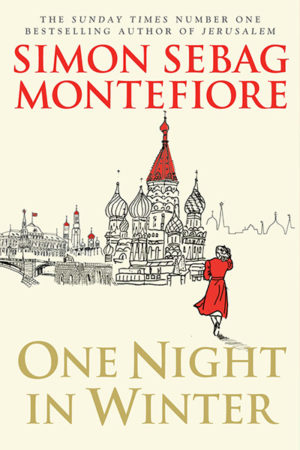
One Night in Winter

If your children were forced to testify against you, what terrible secrets would they reveal?

The historian Simon Sebag Montefiore is well known and highly respected for his award-winning non-fiction bestsellers such as Jerusalem, The Romanovs and Stalin. However, this gripping historical novel also proves his expertise as a writer of fiction. A quicker, slimmer read than many of his other works, it is just as involving and darkly exciting.

Read full Review

Review by

The End of Eddy

A punch of a book

Wow! What a punch of a book. Eddy Belleguele grows up in a dirt-poor working class family in the north of France. Realising early on he’s gay, Eddy spends the rest of his youth trying to hide his sexual orientation from the macho, homophobic, misogynist and racist environment he’s born into. The End of Eddy is an extraordinary autobiographical novel of survival and courageousness and a truly magnificent book.

Read full Review

Review by

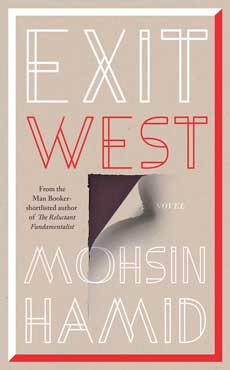
Exit West

A refugee story that veers off course

Unless I’ve completely missed it (?), it’s taken a while for the refugee crisis to trickle through in fiction. Mohsin Hamid’s Exit West (to be published in the UK on 2nd March) will finally change that with the love story of Nadia and Saeed fleeing an unnamed war torn country (with an uncanny resemblance to Syria or Iraq). As much as I wanted to like this book – I’m a fan of Hamid (The Reluctant Fundamentalist and How to Get Filthy Rich in Raising Asia)  and think this human catastrophe deserved literary attention – it left me with mixed feelings.

Read full Review

Review by

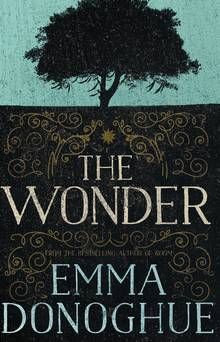
The Wonder

Religious fervour in potato famine era Ireland

Lib Wright, a nurse trained by ‘Miss Nightingale’ is hired for a two-week position in the ‘dead centre’ of Ireland. A young girl has not eaten for 4 months, yet appears to be well. Her fanatically religious parents have proclaimed her to be a miracle, and pilgrims make their way to the cottage to worship the little saint-in-making. If you enjoyed Room, Emma Donoghue’s first book, then you might be put off by the very different subject matter she has chosen here. Don’t be. It is moving, lyrical, intense and surprising.

Read full Review

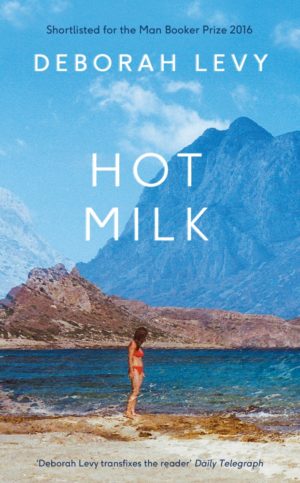
Hot Milk by Deborah Levy

Review by

Hot Milk

The perfect antidote to grey winter days…escape into a richly mythic, colour-saturated tale of a mother and daughter

Rose and her daughter Sofia arrive in a small Spanish fishing village – a strange, dreamlike place caught between the searing heat of the desert and the mesmerising pull of the sea. They are desperately seeking medical help and salvation. Rose suffers from a mysterious, inexplicable illness, which presents in spontaneous, spasmodic paralysis of her legs and has left her wheelchair bound. Her daughter, Sofia, has spent her life trying to understand her mother’s illness, trapped in an unhealthy co-dependent relationship and forced to act as her bemused carer. The mystery of this undiagnosed illness forms the background of the entire novel. Sofia explains, “I have been sleuthing my mother’s symptoms for as long as I can remember. If I see myself as an unwilling detective with a desire for justice, is her illness an unresolved crime? If so, who is the villain and who is the victim?”

Read full Review