Bookstoker Young Readers
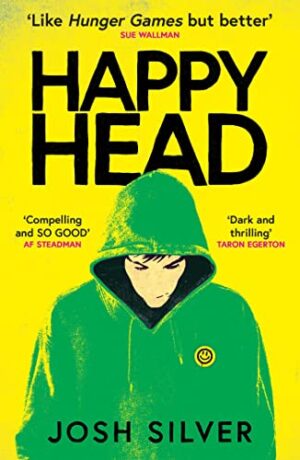
HappyHead
Marvellously sinister dystopian thriller
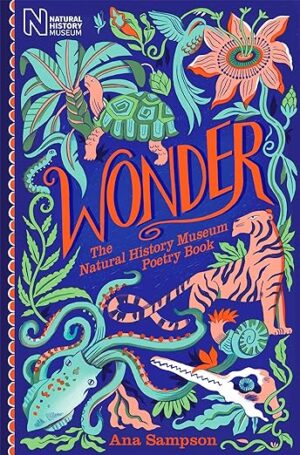
Wonder – The Natural History Museum Poetry Book
Honouring a cathedral to nature
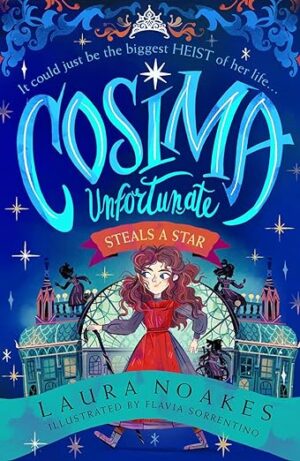
Welcome to Bookstoker!
We’re here to help you find that book that you can’t put down, the book you’ll push on all your friends, the book that’ll change your life.
We read literary fiction, non-fiction, classics and children’s books, all genres and styles embraced in our aim to share the love. You’ll also find fabulous Bookstagrams and literary news.
A world of bookish delights!
Kirstin and Julie



A bildungsroman unlike any other, Split Tooth by Tanya Tagaq takes us to the Canadian Arctic and a landscape of boundless terrain and immense skies. It’s the 1970’s and a young Inuk girl tells of her childhood in this extraordinary environment, where deprivation and discrimination sit uneasily beside a magical northern world of nature and mythology. When puberty arrives, it will bestow a shamanic gift upon the girl and prompt her, incredibly, to seek communion with the Northern Lights.
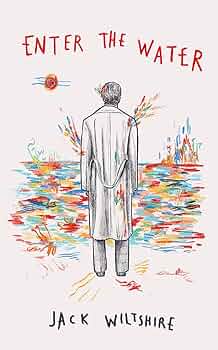
Early on in Enter the Water by Jack Wiltshire, we’re casually told that there’s no hero story to be found here, but by the end of this exhilarating verse novel, you may well disagree. It tells the story of a vulnerable Cambridge student, evicted from his flat and sleeping on a park bench. Setting out on an odyssey to the coast, accompanied by pigeons, a blackbird and the forces of Nature itself, his story is a clarion call for appreciating the natural world and cultivating stoicism in our infinitely troubled times.
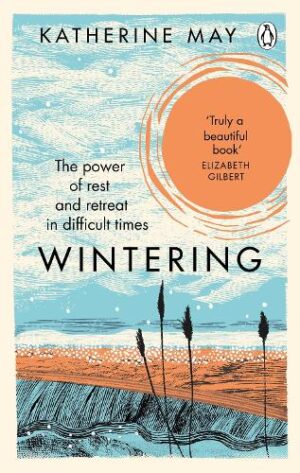
You’ll grow to love winter, both the seasonal and the emotional, after reading the soothing Wintering by Katherine May. I adored this little book, written by May after a break-down caused by a cocktail of undiagnosed autism, an ill husband and an exhausting job. Leaving her job and the pressures of daily life behind, May retracts from the world and cocoons herself with her young son in almost hibernation. There she finds the peace she’s been desperately craving and learns to love herself – and winter, the most unlovable of seasons.

The first time Yoella lays eyes on her young granddaughters, it is through the window panes of their Groningen home. Having travelled thousands of miles to see them, she is hiding in the gathering dusk of their front garden, concealed and mesmerised. In the prize-winning How to Love Your Daughter by Hila Blum, Yoella retraces the painful path that has led to estrangement between herself and her only child, Leah. Setting the reader the compelling task of unpicking her account and assessing the silences, Yoella’s story is one of intense introspection and all-consuming love.
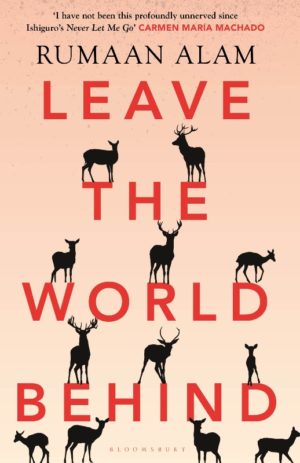
Amanda and Clay – a successful, liberal New York couple – are staying in a smart rental summer house in the Hamptons with their kids. When the phone and internet connections go down and a black couple, Ruth and G.H., claiming to be the owners of the house, knock on the door asking for shelter, Amanda and Clay’s proclaimed tolerance is put to the test. Who is this couple? Can they be trusted? And why doesn’t the communications network function? Cyberattack? Terrorism? War? Nuclear accident? Catastrophe looms in Leave the World Behind by Rumaan Alam, the most unsettling and frighteningly believable novel I’ve read in a long time.


One chilly January morning in 1957, a man discovers two dead bodies on a Japanese beach. A young woman in an immaculate kimono and a gentleman with polished shoes. Curiously, both corpses are rosy cheeked, an anomaly explained away by the police doctor as a sign of cyanide poisoning. It’s almost certainly a classic love suicide pact, but in Tokyo Express by Seichō Matsumoto, we’re reminded to challenge even the most elementary assumptions, particularly when one of the deceased is a government official implicated in a bribery scandal. A meticulously (some might say obsessively) plotted 1958 Japanese crime classic, it’s a deliciously knotty read.
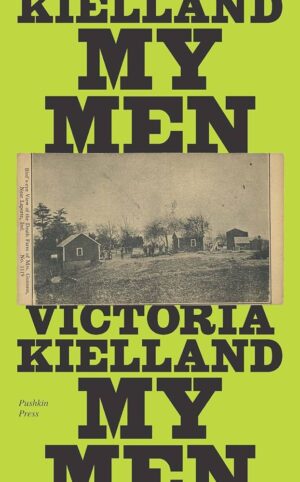
Brynhild is seventeen and in love. She’s been told many times that she needs to know her place, and she does. By day, her place is in the kitchen as a housemaid, but by night it’s in the feverish embrace of the master’s eldest son. Quiet and pious, she is awaiting God’s blessing of their love. God, of course, has other plans, and in My Men by Victoria Kielland, we watch as Brynhild morphs into Belle Gunness, the murderous owner of a dark ‘carnivorous heart’. Based on the true story of America’s first known female serial killer, it’s an intense and mesmerising affair.

The non-fiction book The Wager was one of my reading highlights this summer so when I heard of Killers of the Flower Moon by David Grann I jumped on it. This time, Grann takes us to early 20th century Oklahoma, a state established to house the many displaced Native Americans. After being forcibly moved away from fertile land, the Osage tribe were assigned a rocky patch of no apparent value until, that is, oil in large quantities was discovered. The Osage became immensely rich – at the time they were the wealthiest people in the world – and lived comfortable lives. For a while.